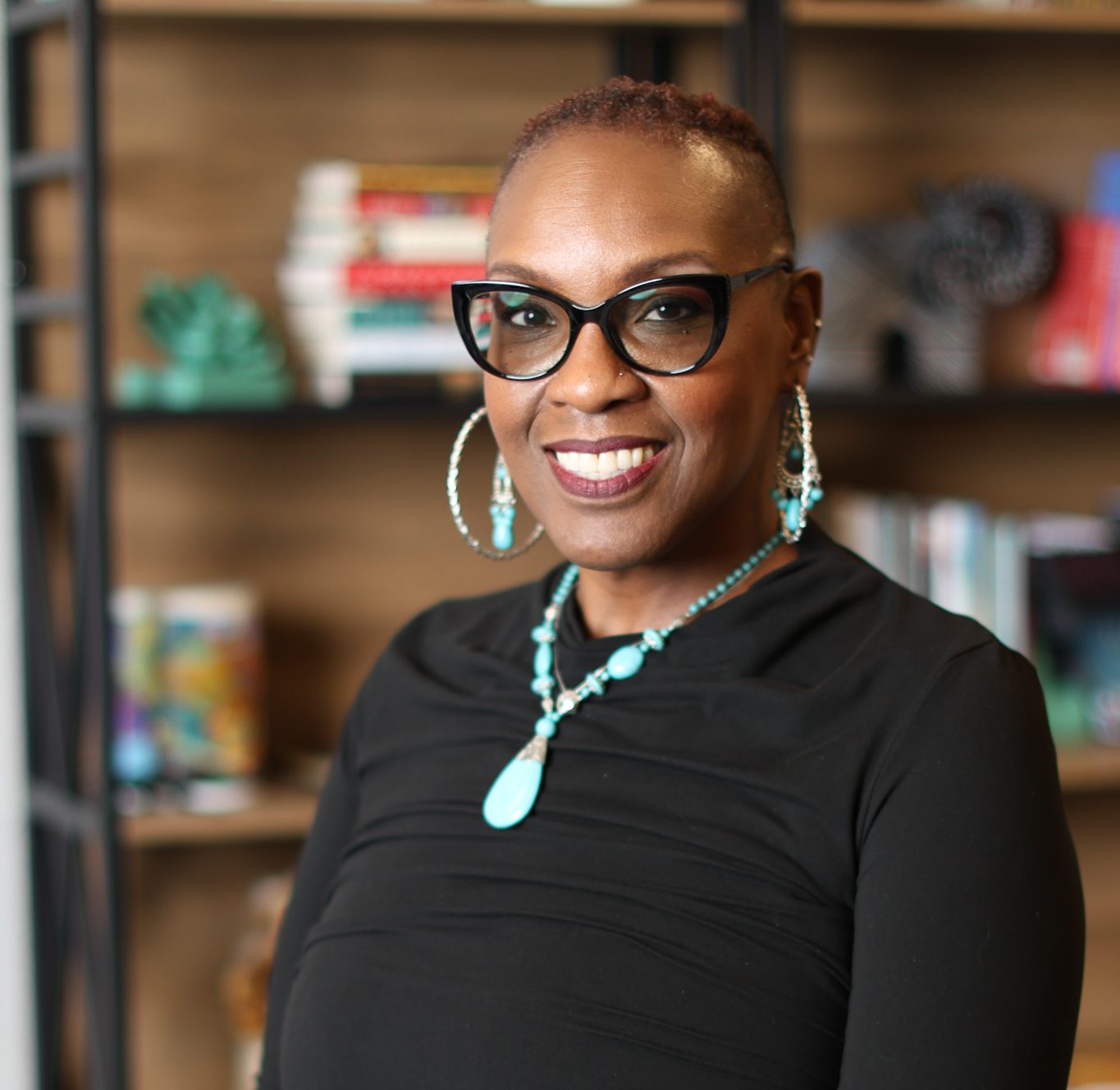
How Mental Health Hero Kalimah Johnson Supports Survivors With Courage and Care
The spark that became the SASHA Center started with a dream. After years of witnessing how Black women and girls experienced sexual assault response in Detroit, Kalimah Johnson knew something different was needed. That commitment to culturally rooted, community centered healing is part of what led to her being named a 2025 Leonard W. Smith Mental Health Hero by the Ethel and James Flinn Foundation.
One night, after a long month of reflection and frustration, she heard a quiet voice telling her to start her own support organization and name it SASHA. By morning, the acronym had flowed through her fingertips: Sexual Assault Services for Holistic Healing and Awareness. Fifteen years later, the SASHA Center is a nationally recognized model for culturally specific, trauma informed care rooted in community, literary arts and truth telling.
We sat down with Kalimah to learn what this award means to her, how she approaches healing and culture, and why rest is such an essential part of her work.
Q&A With Kalimah Johnson, Founder and Executive Director, SASHA Center
Q: How did you feel when you learned you were receiving this award?
A: I was completely shocked. I hadn’t heard of the award, so when I got the call, I was in the middle of rethinking our programming because we had just learned some government funding was ending. Then this news came. My next feeling was overwhelming gratitude. I felt seen. It felt timely for me as an executive director and as a scholar. And I had to ask myself, When was the last time you took a break? The tears came. I was moved.
Q: You have a rich and unusual background. How did your journey lead you into this work?
A: I started out as a rapper, one of the first female rappers on wax in Detroit. I opened for big acts and signed a local record deal. When rap took a turn in the late 80s and early 90s, I didn’t feel aligned with the content anymore. I had always been a poet, so I rooted myself in the Detroit poetry community. I became the city’s Slam Master and poet in residence at the Detroit Symphony Orchestra. At the same time, I was also a full time clinical social worker. Art and healing have always been connected for me.
Q: How does poetry inform your work with survivors of sexual assault?
A: Poetry is everywhere in the SASHA Center. In the beginning, Detroit poets were essential to our growth. They served on my board, decorated our spaces and performed at our fundraisers, helping lay the cultural foundation for who we have become. Clinically, poetry helps people integrate the traumatic experience of sexual assault. We use bibliotherapy, close reading and writing as healing tools. Our weekly online program, Healing Is LIT, stands for literature igniting truth. People immerse themselves in the writings of Black women poets, which helps them reconnect with voice, identity and joy.
Q: What led you to create the SASHA Center?
A: I worked for years as a therapist in the Detroit Police Department’s Rape Counseling Center. I saw a lack of urgency for Black women and girls who came in after an assault. I raised concerns and tried to get answers, but it didn’t change. Later, when the rape kit backlog was discovered and most of the untested kits belonged to Black women, it confirmed what I had felt. That broke my heart.
I then worked as a consultant for the Michigan Coalition to End Domestic and Sexual Violence, helping mainstream programs understand culturally specific care. One night, after a difficult month, I dreamt I should start my own agency. By morning, SASHA had its name, its purpose and its focus on centering the lived experiences of Black women and girls.
Q: What makes the SASHA Center’s approach unique?
A: We center Black women’s lived experiences while welcoming anyone who wants to join our groups. Our work is grounded in the belief that culture can heal and that history shapes how we care for one another. Our support groups are intergenerational, culturally rooted and trauma informed. Conversations include racism, reproductive injustice, systemic harm and the realities Black women face in this country. People bring their whole selves into the room. Our role is to create a soft place for them to land and to ask, not why Black women aren’t healing, but how they have been healing all along and who has paid attention.
Q: You also work nationally with sports leagues. How does that connect to mental health?
A: Through my consulting practice, I’ve spent nearly 15 years as the lead consultant on relationship safety and management for the NBA. I work with players on consent, boundaries, values and healthy relationships. I also advise when a player has been accused of or involved in domestic or sexual violence. It’s mental health work because relationships, safety and emotional understanding affect performance and well being. I’ve done similar work with the NFL, MLB, the NHL, the WNBA, the G League and NCAA programs. It’s all about prevention, education and accountability.
Q: What are your plans for the time away that comes with this award?
A: I’m working on my PhD in English literature at Wayne State. I’ve finished all my coursework and exams. Now I need to write my prospectus. I want to write in places that matter. I want to spend time in New Orleans because of its deep culture. I want to go to Ghana, West Africa, to write and reflect. And I want to go to Kentucky, near the home of my friend Betty Wooten, who is a descendant of the family that owned my family when they were enslaved. Her home has become a place where I’ve found rest, healing and ancestral connection. The writing I’ll do in these places, drawing on the words of Black women poets from Detroit, will be a gift to the city and also a gift to myself, my clients, my staff and anyone who engages with this work.
Q: Why is rest such an important part of this award?
A: We live in a world that values us based on productivity, but you can’t pour from an empty cup. Rest is healing. Rest is resistance. This award forces us, in a good way, to center ourselves, reset and honor our bodies and spirits. Social workers often push past exhaustion because we care so deeply for others. I’ve been doing this work for 30 years and have never been given the chance to take this kind of break. It will make me a stronger leader, poet and healer.
Q: What do you most want people to know?
A: That healing is possible. That resting is necessary. And that everyone deserves a soft place to land.
Learn more about Kalimah Johnson and the SASHA Center. Find out about the Leonard W. Smith Mental Health Hero Award and the Ethel and James Flinn Foundation.