Boys & Girls Clubs of Greater Detroit Expands Mental Health Support in a New Setting
The Boys & Girls Clubs’ Behavioral Health program, launched in 2022, was designed to integrate behavioral health support into everyday club programming. By embedding services such as therapy, social-emotional learning and staff consultation, the program aimed to make mental health support accessible and normalized for young people.
The former Boys & Girls Clubs of Southeastern Michigan is now Boys & Girls Clubs of Greater Detroit, a name Dr. La-Toya S. Gaines, Executive Director of Behavioral Health, says reflects the organization’s current and future growth.
That growth includes a new location inside Michigan Central, which officially opened in February 2026. The 15,000-square-foot club is located inside The Station and is described by Michigan Central as a first-of-its-kind model that places youth inside a working innovation district.
For Gaines and her behavioral health team, the new site offers a different setting for the same larger goal: making mental health support accessible, relevant and connected to young people’s lives.
Behavioral health as part of the club environment
Gaines, a licensed clinical psychologist, oversees a behavioral health department that includes a director of social work, a program coordinator, psychology and social work interns, and other trainees. She describes the team as “small but mighty.”
Across the clubs, their work includes direct care for youth and families, consultation with staff, and support during mental health needs or crises that may arise during programming.
Gaines says part of the behavioral health team’s role is collaborating with staff across the clubs to help them recognize and respond to mental health needs and crises that may arise during programming. That includes supporting youth development staff in approaching youth through a trauma-informed lens and connecting young people to additional support when needed.
Any adult interacting with youth, including club directors, youth development specialists, transportation staff and culinary team members, can make a referral to behavioral health. Parents and caregivers can also request services.
Most services are provided on site. When a young person has more complex needs or requires longer-term care, the team helps connect the family to outside support. Gaines said the most common concerns include anxiety, depression, trauma, attention-related challenges and behavioral concerns.
Last year, the behavioral health department served more than 900 youth and families in some capacity, including individual counseling, family therapy, assessments, group programming, emotional regulation support, conflict resolution, resiliency work and workshops.
What is different at Michigan Central
The Michigan Central location is not structured like a traditional club. It is designed primarily for older youth and young adults, with programming aimed at exposure to career pathways and hands-on experience in a range of fields.
Gaines said the club is especially geared toward youth ages 14 and older. Young people can explore areas such as media production, fashion and other fields through “industry clubs” that provide exposure to career pathways and connections to professionals in mentorship roles.

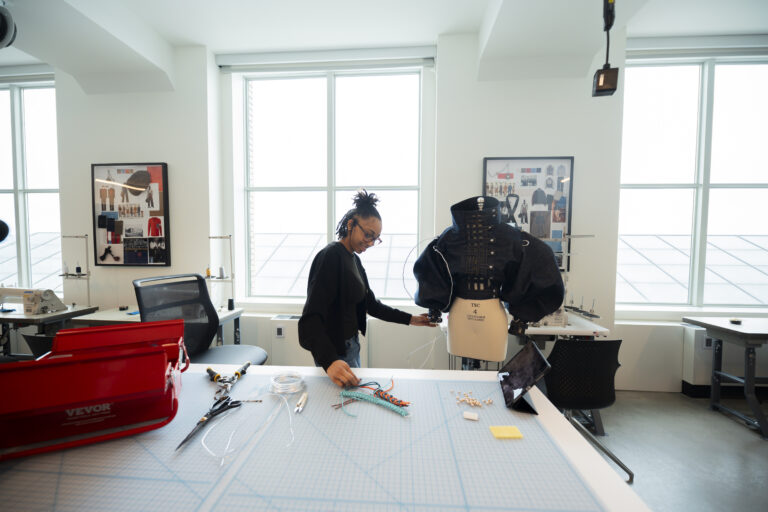
The physical environment reflects that focus, with spaces dedicated to podcasting, production, fashion and other creative pursuits. For youth with interests in those areas, the club provides access to equipment, practice opportunities and guidance they may not otherwise encounter.
“I think it is very affirming for somebody to say, not only verbally, ‘I believe in you,’ but ‘here are the tools you need, here’s the space that you need, and here’s a person who can assist you with that,’” Gaines says.
“That goes from being something you imagine or visualize to something that’s real and tangible,” she adds.
A preventative approach to mental health
Because the Michigan Central site functions differently, the behavioral health approach there is different as well.
Rather than focusing primarily on one-on-one therapy, Gaines and her team provide workshops that meet youth where they are.
Topics include managing stress, coping with disappointment, navigating new responsibilities and understanding emotions that arise as young people begin to think more seriously about adulthood and future careers.
For example, a young person may participate in a pitch or performance opportunity and not be selected. Experiences like that create opportunities to talk about resilience, confidence and self-worth in real time.
The approach also helps reduce stigma. Gaines says the workshops introduce mental health topics in a way that feels relevant rather than clinical.
“I think it’s a nice way to introduce mental health in a way that’s not stigmatizing,” she says.
Youth voice is also shaping the programming. After workshops, participants are asked what they found useful and what topics they want to explore next. Gaines says she has been struck by how often youth ask for more information about mental health.
After one session on depression and anxiety, youth asked how to support friends who may be struggling. That feedback led to additional programming focused on peer support. Other requested topics have included navigating adulthood, having difficult conversations with adults and learning how to advocate for themselves.
Gaines says that support is especially important because the organization continues serving youth into early adulthood, helping maintain access to behavioral health resources, mentorship and other supports during a period when many young people are navigating major transitions related to school, work and independence.
Mental health in a broader context
Across all Boys and Girls Clubs in metro Detroit, the most common concerns include anxiety, depression, trauma and behavioral challenges. But many families also face needs beyond behavioral health, including housing instability and financial stress.
The behavioral health team often works to connect families to community resources that address those broader challenges.
The organization has also expanded outreach into schools, with staff currently working in at least one neighborhood school and plans to grow that effort.
Family engagement
One area of focus is increasing engagement with parents and caregivers.
“When we are not just treating the child, but working with the family, those outcomes improve tremendously,” Gaines says.
The organization has introduced more parent coaching, aimed at helping caregivers support emotional regulation, respond to behavioral challenges and strengthen family dynamics.
Ongoing capacity needs
Even as the organization expands, capacity remains a challenge, with more behavioral health staff at the top of the wish list for Gaines.
The department relies in part on interns, and additional staffing and resources would help meet the level of need among youth and families.
Looking ahead
The Michigan Central club reflects a broader shift in how youth-serving organizations can integrate mental health into environments that also offer skill-building and career exposure.
For the Boys & Girls Clubs of Greater Detroit, it is one part of an ongoing effort to provide support earlier, in settings where young people are already spending time, learning and building toward their futures.
Header photo by Darren Clark/via Redfoot Vegas. Inline photo by Michigan Central.
Learn more about the Boys and Girls Clubs of Greater Detroit.