Violence Prevention Is Mental Health Work: How FORCE Detroit Brings Support Into the Community
When people think about preventing community violence, therapy may not be the first intervention that comes to mind. At FORCE Detroit, however, mental health support is woven directly into the work.
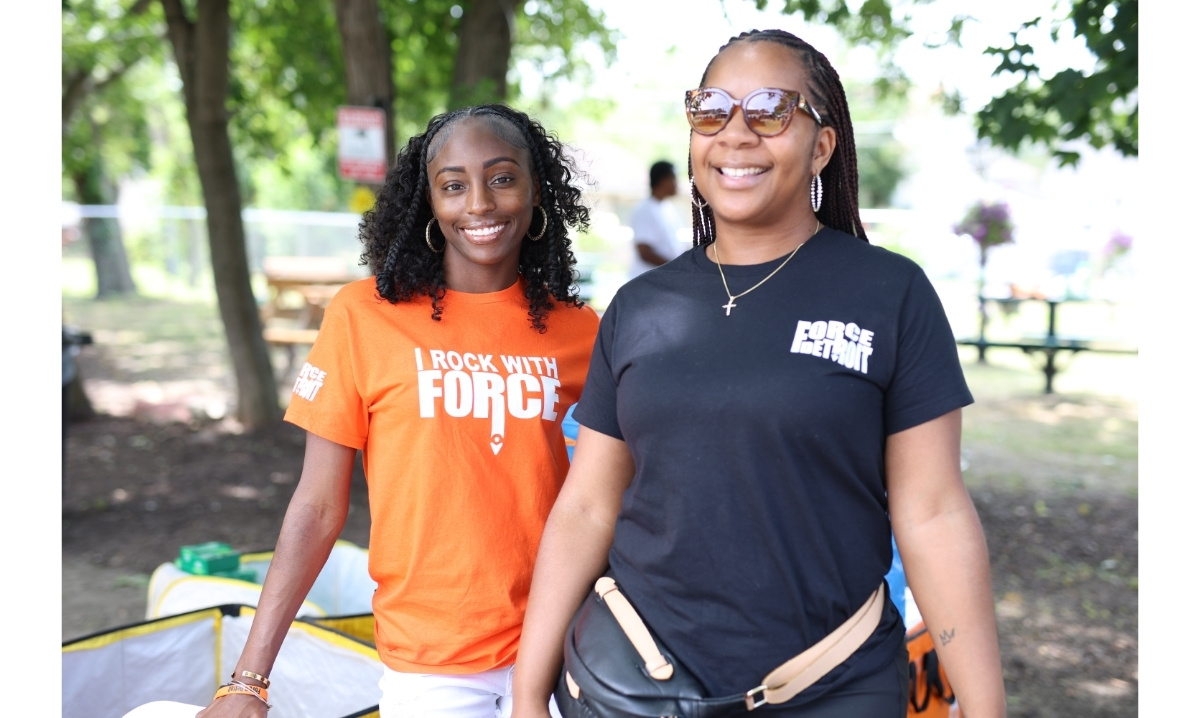
The Detroit-based community violence intervention organization works with people affected by gun violence, with a particular focus on young people ages 14-24. Its team includes violence interrupters, outreach specialists, care managers, workforce development support — and Jazmine Tate, who uses the name JT professionally, an Embedded Therapist at FORCE Detroit.
For JT, that combination reflects something fundamental about violence prevention.
“Mental health doesn’t exist separately from what’s happening in the environment,” she says. “If somebody is consistently exposed to violence, that is obviously going to cause effects with how they think, how they feel, how they respond to things.”
FORCE Detroit’s approach offers a broader way of thinking about both mental health and violence prevention: Instead of waiting until someone reaches a crisis, what can happen when support is built into the community around them?
Bringing mental health care into the community
JT first came to FORCE Detroit as an intern while completing her master’s degree. Today, she is the organization’s sole Embedded Therapist.
For JT, “embedded” is literal: She lives within the community she serves and provides support in the places where people already feel comfortable and connected. Rather than waiting for someone to walk into a traditional therapy office, she is part of the community and the work happening within it.
Before bringing the role in-house, FORCE Detroit outsourced therapy services. JT says that sometimes worked, but finding therapists who were a good cultural fit for the population the organization serves could be difficult.
Having a therapist who is already part of the community and involved in the work offered another approach.
JT receives referrals from FORCE Detroit’s violence interrupters, outreach specialists and care managers, but she also builds relationships with young people through the organization’s programming and community events.
That might mean joining FORCE Detroit’s athletics, music or Rites of Passage programming, working with Cody High School students, leading skill-building sessions or simply spending time getting to know someone before asking them to sit down for therapy.
“Being embedded to me just allows me to build a different relationship and provide support within environments where people already feel connected,” JT says.
Sometimes a traditional office isn’t the best place to begin. JT might meet someone for food or go to a park if that helps build the trust necessary for a therapeutic relationship.
The goal is to make mental health support accessible, practical and relevant — particularly for people who may carry stigma or distrust around therapy.
“You can have a therapist and be great,” JT says. “There is nothing wrong with therapy.”
Prevention can start long before a crisis
FORCE Detroit’s violence prevention work extends well beyond responding after violence occurs.
Through community violence intervention athletics, FORCE Detroit and partner organizations bring young people together for activities including basketball and football. The organization also offers music programming, and JT is developing programming specifically for girls and young women.
These activities create opportunities for connection. They also create opportunities to teach skills that can change how a young person responds when conflict occurs.
During basketball programming, for example, JT leads sessions about anxiety, triggers, emotional intelligence and self-awareness.
Those lessons can become very practical when emotions run high during a game. What happens if another player pushes you? Was it intentional? Could you walk away? What are your choices besides fighting?
“Everyone has emotions, but it’s really that next step on what you do,” JT says.
Helping young people recognize their emotions, pause and consider different responses can give them tools for situations far beyond the basketball court.
“Everything doesn’t have to require fighting or yelling or screaming or arguing,” JT says. “There are other ways to handle conflict.”
Mental health care and violence interruption can work together
That connection becomes especially important when a conflict carries the potential for real-world violence.
JT describes her role as distinct from that of FORCE Detroit’s violence interrupters. She can help someone work through anger, identify what they are feeling and think about what they want to do next. But if a situation requires street-level knowledge, mediation or relationships she does not have, she can bring in colleagues who do.
For example, if a participant is involved in a serious conflict and wants to find a resolution, JT can connect with a violence interrupter who may be able to help facilitate mediation. That collaboration means neither mental health care nor violence interruption has to operate alone.
It also depends on trust. JT says participants may hesitate to tell a traditional therapist about certain conflicts because they fear getting in trouble or having law enforcement contacted. Her relationship with participants can create space for conversations that reveal when someone is frustrated and venting — and when a situation may require additional intervention.
“I’m not here to give you advice,” JT tells participants. “I’m just here to help support you and you make the best decision for yourself.”
The effects of violence reach beyond those directly involved
FORCE Detroit also recognizes that the mental health effects of community violence can spread well beyond the people physically injured.
After gun violence occurs in a neighborhood, members of the organization may go into the surrounding community when it is safe to do so, checking on residents and identifying people who need support.
JT offers the example of a young child who may have been outside when a shooting occurred or heard gunfire nearby. That child may not appear in any official accounting of people affected by the incident, but the experience can still be traumatic. The same can be true for families and neighbors living with repeated exposure to violence.
FORCE Detroit’s response can therefore include mental health support alongside assistance with needs such as employment, education, housing, food and other resources.
“If the child is struggling, that means that their household is struggling,” JT says.
The goal, she explains, isn’t simply to address one immediate problem. FORCE Detroit wants families to be in a stronger position even after the organization is no longer actively supporting them.
Looking beyond what someone did
At the center of FORCE Detroit’s model is a different question about people who have experienced or become involved in violence.
“At FORCE Detroit, we look beyond the question of what did this person do?” JT says. “And we like to ask what happened to this person? What are they carrying? What support do they need to move forward differently?”
That shift matters when working with young people whose lives may include trauma, grief, conflict or repeated exposure to violence.
It also demonstrates why violence prevention can be understood as mental health work. For JT, helping someone move forward may mean therapy. It may mean learning to recognize a trigger, finding a different way to respond to conflict, connecting a family with resources or bringing in a violence interrupter before a situation escalates.
And sometimes it means exposing a young person to possibilities they haven’t encountered before.
FORCE Detroit has taken young people golfing and to Lansing, for example. JT says some participants have rarely had opportunities to leave Detroit.
One young man involved in the organization’s football programming was accepted to Howard University and plans to study criminal justice, with hopes of eventually joining the FBI.
“You don’t know what you don’t know,” JT says.
That idea reaches beyond any single FORCE Detroit program. Preventing violence means giving people more than a warning about what not to do. It can mean giving them relationships, resources, coping skills and opportunities that make a different future possible.
And it means recognizing mental health support not simply as something offered after a crisis, but as one of the tools that may help prevent the next one.
Learn more about FORCE Detroit.