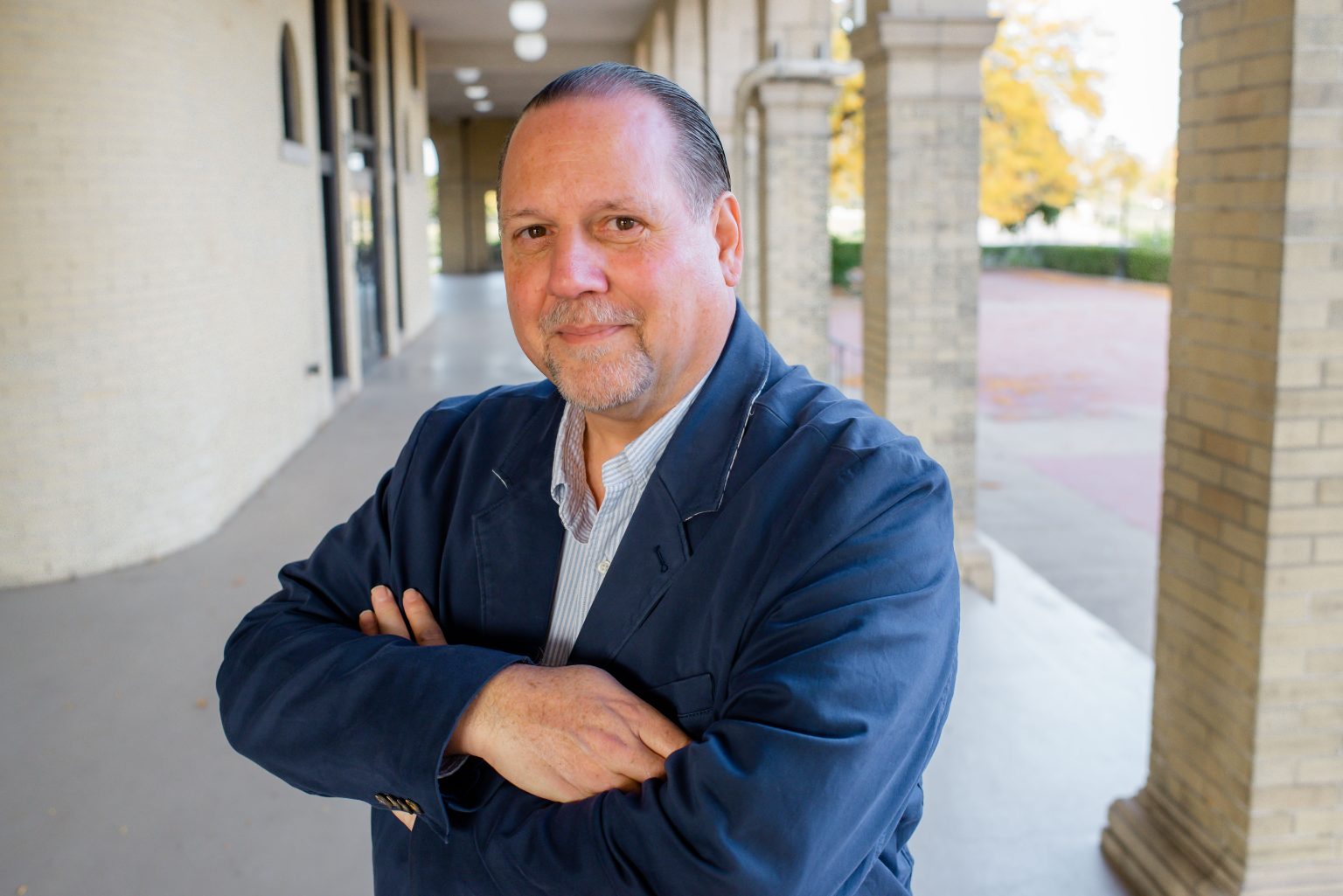
How Mental Health Hero James Ebaugh Connects Housing, Healing and Hope
As a 2025 recipient of the Leonard W. Smith Mental Health Hero Award from the Ethel and James Flinn Foundation, James Ebaugh, executive director at MiSide Health, is reflecting on his journey and preparing for a dedicated period of rest and renewal.
We caught up with him to talk about the recognition, his path and how he hopes to use his time away to strengthen both his organization and the region he serves.
Q&A With James Ebaugh, LMSW, Executive Director, MiSide Health
Q: How did your work in mental health begin?
A: My path started in the classroom. I taught third, fourth and fifth grade and spent a lot of time one on one with kids who were struggling. Many were dealing with challenges at home, including mental health or housing instability. I realized the issues I cared about most weren’t just academic. They were emotional, relational and systemic. That led me back to school to get my MSW, and from then on, I was committed to mental health work.
Q: You’ve worked across several community organizations, including homelessness services and behavioral health. How did those roles shape your leadership?
A: My first job after earning my MSW was with Southwest Counseling Solutions, now MiSide Health. I worked in the homeless recovery services program doing clinical work, street outreach and crisis intervention. It was intense and humbling. I met people with complex trauma histories and learned how much housing and mental health are connected. You can’t stabilize your mental health if you don’t know where you’re sleeping that night.
Later, I moved into leadership roles managing housing programs and eventually directing the entire homeless recovery division. Those experiences helped me understand the bigger systems at play, including funding and partnerships, and how important it is to advocate for people who don’t always have a voice.
Q: What do you see as the biggest mental health challenges facing people in southeast Michigan?
A: Access is a big one, but so is fragmentation. People need housing support, clinical care, employment help or case management, but they often have to go to different places to get those things. When services aren’t coordinated, people fall through the cracks. We’ve seen improvements in how behavioral health providers, housing organizations and community agencies work together, but there is still a long way to go.
Another challenge is trauma. So many people we serve are carrying layers of it — childhood trauma, violence, homelessness, generational poverty. Trauma affects how people cope, how they trust and how they build relationships. Healing takes time and consistency.
Q: You often talk about the importance of hope. What does that mean in your work?
A: Hope is such a big part of what we do. When people come to us, they’re often worn down or overwhelmed, and they may not be able to see possibilities for themselves. Part of our job is to hold that hope until they can. When someone feels believed in, when they feel like someone is standing with them, it can shift how they see their future. I’ve had people come back years later and say that what made a difference was knowing someone was in their corner.
Q: You mentioned that funding is shifting in ways that affect your work. How are you approaching those challenges?
A: A lot of the funding that supported community mental health and housing over the last few years is going away. The dollars aren’t stretching as far and the needs haven’t decreased. We also don’t yet know what the new administration’s priorities will be. That creates uncertainty.
What I try to do is come back to the basics: look at what the community needs, look at what resources we have and figure out how to bridge that gap. That’s the challenge, but it’s also the work. I’ve always liked trying to solve problems and find creative ways to meet needs, even when the funding landscape shifts. It forces us to think differently and build stronger partnerships. You can’t control the environment, but you can respond to it in a thoughtful way.
Q: What does the Leonard W. Smith Mental Health Hero Award mean to you?
A: It’s a huge honor. I see it as recognition of the work our whole team does, not just me. Our staff are passionate, dedicated and incredibly talented. They show up for people every day, even when the work is hard. This award also reminded me how important it is to pause and reflect. Leadership can feel nonstop, and having structured time to step back is a real gift.
Q: How do you plan to use your time away?
A: I want to focus on wellness and reflection. I’m hoping to attend a men’s health retreat in California and spend time in nature. I’m planning a sweat lodge experience and want to visit hot springs in New Mexico as a form of healing and grounding. I’d also love to spend time with Navajo educators at a community school to learn how they integrate culture, identity and mental health into daily life. And if I can make it happen, I want to take a long-dreamed-of trip to Australia. More than anything, I want to come back centered and energized for the work ahead.
Learn more about Jamie Ebaugh and MiSide Health. Find out about the Leonard W. Smith Mental Health Hero Award and the Ethel and James Flinn Foundation.