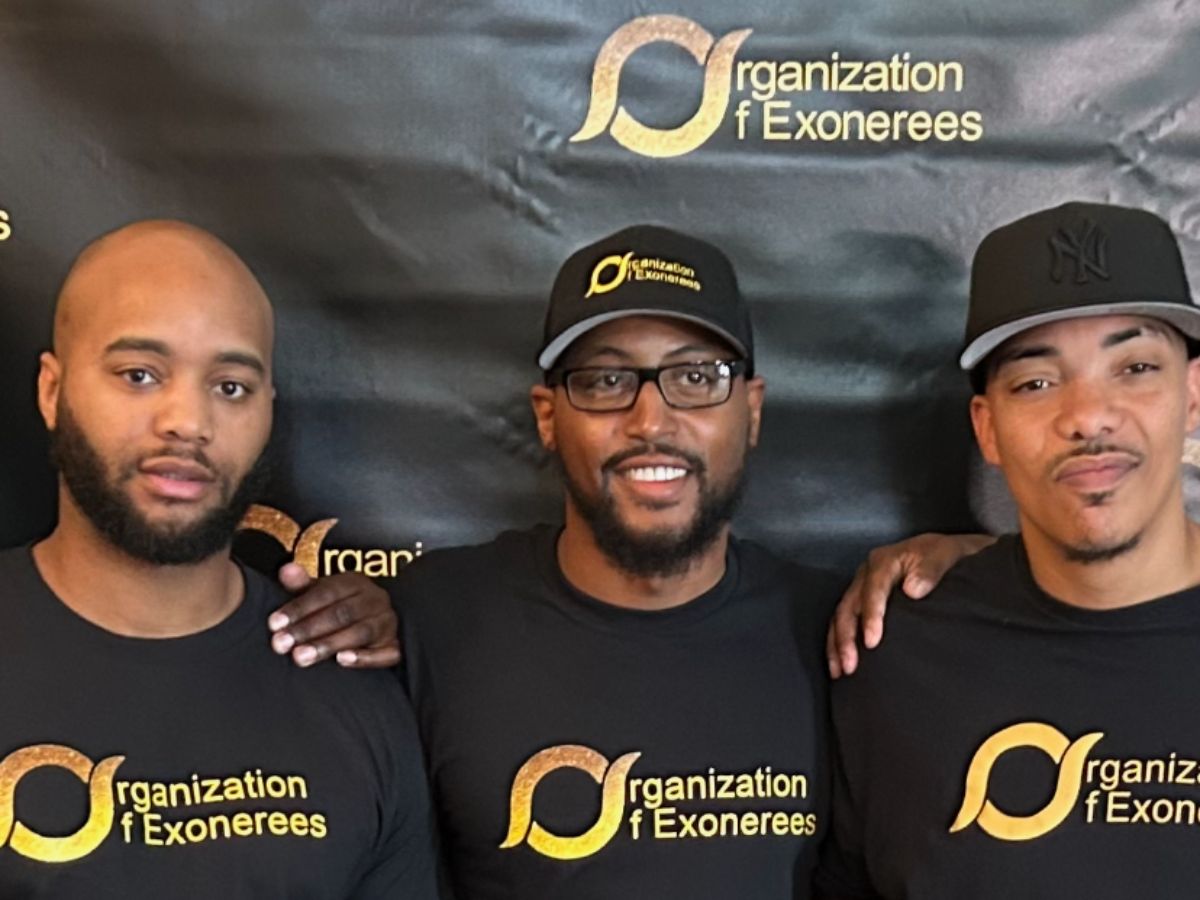
How the Organization of Exonerees Supports Mental Health After Wrongful Imprisonment
When someone is wrongfully imprisoned and eventually exonerated, many people assume the hardest part is over. Freedom is finally restored, family and friends celebrate and the prison gates close behind them for the last time.
But members of the Organization of Exonerees know that’s often when a different journey begins.
Founded by exonerees themselves, the Detroit-based nonprofit supports people who have been wrongfully convicted as they rebuild their lives after release. While the organization helps members navigate practical challenges like obtaining identification, housing and other essential resources, its leaders say one of the greatest needs is often invisible: mental health.
“People assume that you’re normal when you come home,” says Executive Director Kenneth Nixon, who was wrongfully imprisoned before being exonerated. “There’s this assumption that you walk out of prison and everything’s fine. You just go back to life as usual. When in reality, the entire world has changed.”
An organization built by exonerees, for exonerees
Michigan is home to approximately 193 exonerees, according to Nixon. Since its founding, the Organization of Exonerees has supported close to 100 people, and its long-term goal is to reach every living exoneree in the state.
The organization didn’t begin with a strategic plan or a vision to start a nonprofit.
“It was just a group of people with similar experiences and similar backgrounds that were trying to navigate systems and agencies that were locking us out,” Nixon says.
When he was released from prison, five exonerees were waiting outside the prison gates. They helped him obtain identification, navigate government systems and answer questions that only someone who had lived through the experience could answer.
“There were no resources for people that were wrongfully convicted,” Nixon says. “The system is designed to put you in. It is not designed to let you go when they figure out that you did not commit the crime.”
That need led exonerees to begin helping one another, eventually forming what Nixon believes is the only peer-led organization of its kind in the country.
“There was no blueprint to the Organization of Exonerees,” he says. “We’re the only organization in the country that operates like this. We’re peer led. We make our own decisions. We help our community because we feel like it’s necessary.”
Today, lived experience remains the organization’s greatest strength. Rather than relying solely on traditional models of reentry support, the people leading the work have navigated the same challenges themselves, allowing them to build programs around what exonerees actually need.
Supporting mental health needs others often overlook
Many people assume freedom brings instant relief. Ciera Renee’, Director of Mental Health and Wellness at the Organization of Exonerees, admits she once believed the same thing.
Working alongside exonerees quickly changed that perspective. “The layer of being wrongfully convicted, that amount of trauma that was imposed on all of them is definitely different,” she says.
Nixon says prison fundamentally changes how people survive and interact with the world.
“PTSD is an understatement for a lot of people,” he says. “Prison is exactly what you think it is. It is a highly violent environment. It is a very hostile environment.”
Even everyday interactions can become difficult after years of adapting to prison life. “It’s against the rules to touch people in prison,” Nixon explains. “Now when you come home, your family wants to hug you. There’s a level of trauma associated with that that is not easy to navigate.”
Some members struggle with crowded spaces. Others have difficulty sleeping. Certain smells or places can trigger painful memories. “We have people within our organization that can’t even say their own names without crying,” Nixon says. “We have people that won’t leave their houses. We have people that have been triggered by scents. The scent of soap triggers some people.”
The organization has also created regular mental health check-ins to make sure members stay connected. “We do touch points with everybody,” Nixon says. “It’s simply a mental health check. I don’t need to know what’s going on in your life. I just need you to respond and tell me you’re alive.”
Healing happens through relationships
Because every person’s experience is different, the organization believes mental health support must be equally flexible. “Healing looks different for each person,” Nixon says.
Renee’ helps connect members with therapeutic resources, facilitates monthly gatherings and creates retreats intentionally focused on emotional wellness. But she also encourages people to think differently about healing.
“Sometimes we have to be honest about some things you can’t heal from because it is what it is,” she says. “So what we try to teach very well is managing.”
She continues, “Healing could also mean that’s a lifelong journey. But if we can be the best manager of our emotions and experiences, that’s our best possible outcome.”
That philosophy shapes everything the organization does. Sometimes support means helping someone process trauma during a retreat in northern Michigan, away from distractions and surrounded by peers who understand. Sometimes it means accompanying an exoneree to a courtroom years after their release because returning to court is emotionally overwhelming.
Sometimes it’s simply answering a phone call after hours when someone has been triggered.
“We can be creative, we can be unique, we can be whatever that person needs in that particular moment,” Nixon says.
Lived experience changes everything
Renee’ says even her professional training couldn’t fully prepare her for this work. “The first exoneree that I met with on an individual basis was Kevin Harrington. I had my toolkit ready. I know exactly what needs to happen here.”
But after listening to his story, she realized she needed a different approach.
“I said, ‘I know nothing about what’s going on. I know nothing about what he went through.'”
Instead of assuming what people need, the organization lets exonerees lead the conversation.
“When you make space for people to tell you their needs and then you help with the functional things that go around that, that’s when I believe you have the most success,” Renee says.
For Nixon, that lived experience is what makes the organization unique. “It made an enormous difference in my transition,” he says of being greeted by fellow exonerees when he was released. “I felt like somebody understood what I was feeling.”
He credits that peer support with helping ground him as he began rebuilding his life.
“You can assume you know what we’ve gone through,” he says. “But nobody actually truly knows unless you’ve been there.”
Growing to meet a growing need
The organization’s work continues to expand. Support from partners, including the Ethel and James Flinn Foundation, has helped the organization grow its mental health programming, including retreats and wellness initiatives. But Nixon and Renee say the need continues to outpace available resources.
Their vision includes embedded therapists dedicated specifically to exonerees, more staff to respond quickly when people need help and the ability to reach every exoneree in Michigan.
“We don’t get to choose,” Nixon says. “We have to take them in whatever condition they show up, whether that’s severely damaged or highly functional.”
For Nixon, that’s what the organization has always been about: making sure no one has to rebuild their life alone. “It made an enormous difference in my transition,” he says of being greeted by fellow exonerees when he was released. “I felt like somebody understood what I was feeling.”
Today, he hopes every exoneree in Michigan has that same opportunity: someone who understands, someone who checks in and someone who reminds them they don’t have to navigate recovery alone.
Learn more about Organization of Exonerees.